
In 2026, the requirements of energy investments are shifting from "who has the bigger system" to "whose assets are more resilient and dependable." Thanks to cost advantages and mature deployment experience, centralized energy storage systems remain the mainstream choice for many large-scale power projects. However, as enterprises place greater emphasis on availability, cashflow recovery speed and asset liquidity, a more flexible model—distributed energy storage systems—is rapidly gaining momentum.
This article explores how distributed energy storage is reshaping the valuation framework for energy assets and emerging as a high-resilience standard asset, and how Renon Power is capturing this opportunity through its 10ft distributed energy storage solution and C&I cabinet all-in-one solution.
Centralized energy storage systems are typically deployed in 20ft or 40ft containers, integrating a centralized PCS (Power Conversion System), a unified cooling system, and a unified control architecture. With a compact structure and centralized O&M, they are widely used in large-scale renewable energy bases (solar + wind + storage), grid peak shaving, frequency regulation projects, and regional power stations with ample land availability
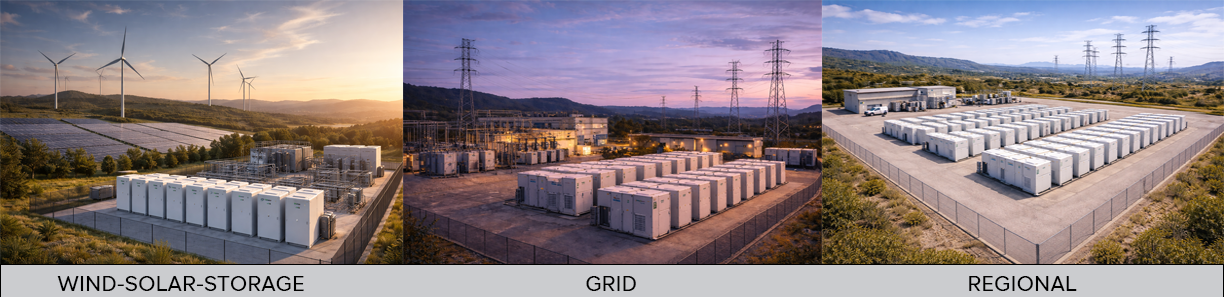
Thanks to their integrated design philosophy and centralized control approach, centralized systems offer lower CAPEX and simplified construction processes. High deployment efficiency also reflects a high degree of system integration, mature construction methodologies, and smooth EPC coordination. In scenarios where land resources are abundant and project lifecycles are long, centralized energy storage can deliver predictable capacity-based returns.
However, centralized energy storage also comes with inherent limitations: Single points of failure may lead to full-site shutdowns, limited flexibility in expansion or relocation, high exit and dismantling costs and weak liquidity in secondary markets. As asset-driven use cases continue to expand, these risks and constraints are becoming increasingly amplified.
Distributed energy storage systems do not refer to “smaller-scale” or “residential” solutions in the traditional sense. Instead, they represent an architectural evolution of energy storage design.
In a distributed architecture, the storage system is decomposed into multiple modules, each with independent management, cooling and protection capabilities while coordination is achieved at the upper level through an EMS (energy management system). Each module is equipped with:
- an independent Battery Management System (BMS);
- an independent thermal management and fire suppression system;
- independent communication and control interfaces;
- liquid-cooling module
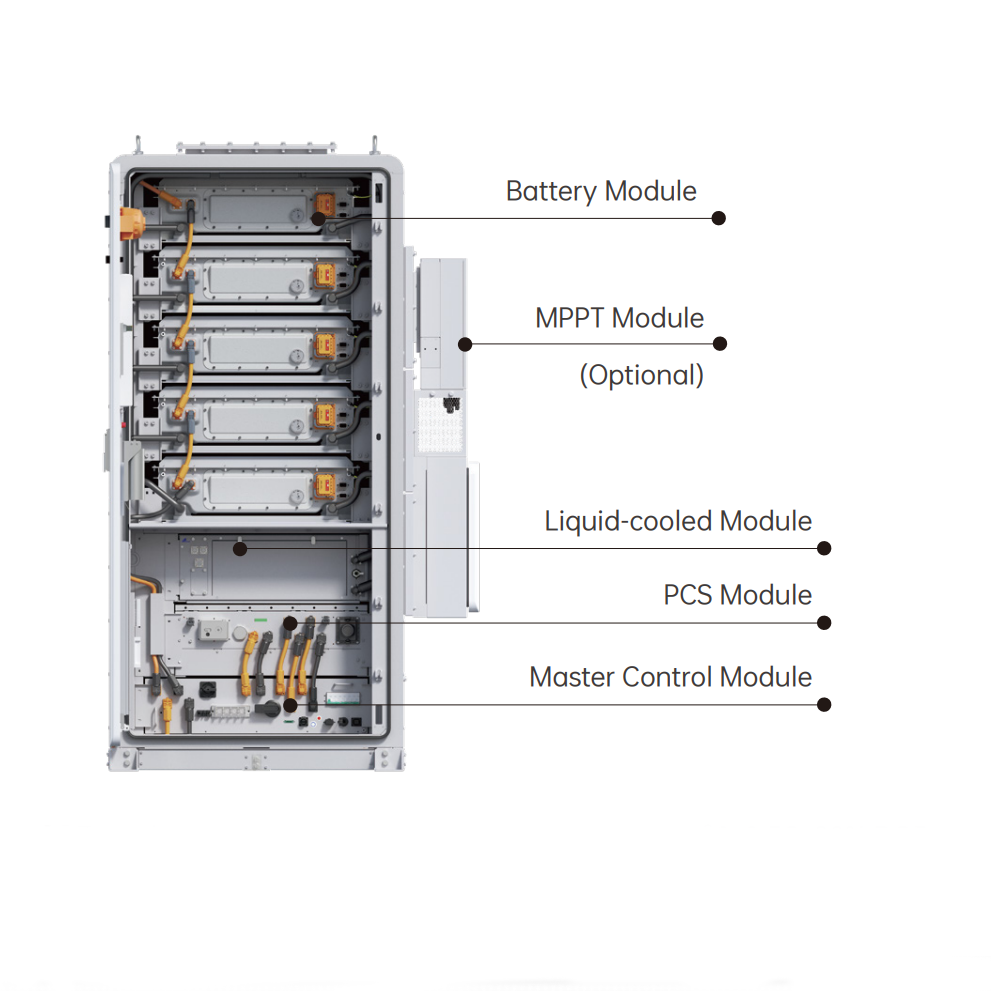
By distributing risk, failures are confined to individual modules, allowing the overall system to remain operational. Highly scalable modules can be expanded or reconfigured on demand. Moreover, each module functions as a transferable energy asset, enabling easier asset segmentation, redeployment, and improved liquidity.
However, distributed energy storage also introduces new challenges and trade-offs.
Initial CAPEX is typically higher than centralized solutions. System architecture, communication, and control complexity increase, requiring stronger system integration capabilities and a greater reliance on advanced O&M frameworks and remote monitoring. Compared with centralized energy storage, distributed systems are not a simple replacement, but a fundamentally different asset-oriented approach.
After understanding the two architectures, we can make an objective comparison across five key dimensions:
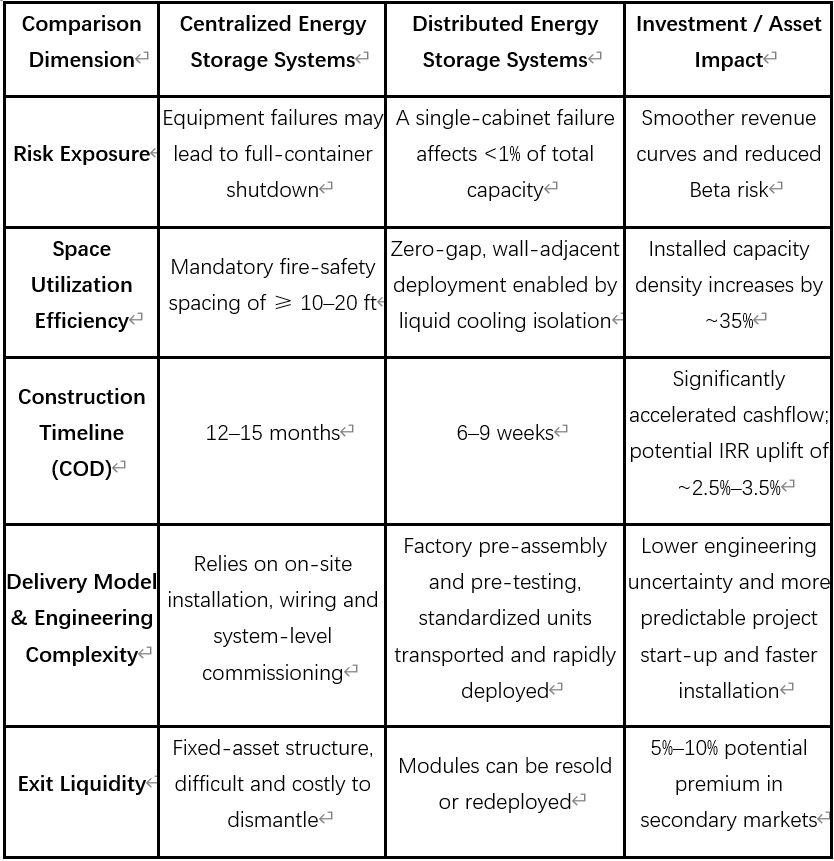
Centralized energy storage is better suited for: projects with low land costs, ample construction timelines and a primary focus on minimizing CAPEX. Distributed energy storage is better suited for: projects that require high availability, rapid deployment and flexible dispatch and scalability.
In response to the challenges outlined above, Renon Power’s distributed energy storage solutions are not designed to be “fully decentralized.” Instead, they focus on controlling the engineering and asset-related risks inherent in distributed architectures.
It is important to emphasize that the advantages of distributed energy storage can only be realized when system complexity is effectively managed. Without robust engineering design and control mechanisms, increased modularity may otherwise amplify operational and integration risks.
Renon Power’s system architecture is built precisely around this principle:
(Right-click to open video in a new tab)
MPack 261A features an IP54 protection rating, enabling stable operation in high-temperature and high-humidity environments. It is equipped with an independent Battery Management System, an independent liquid-cooled thermal management and fire suppression system, ensuring that each storage module has inherent fault-tolerance and fault-isolation capabilities. Multiple modules can operate in parallel, allowing single-point failures to be isolated online without disrupting overall system operation. In addition, the system supports high-speed grid-connected and off-grid switching (≤20 ms), significantly reducing downtime risks and minimizing the impact on mission-critical business operations
(Right-click to open video in a new tab)
Smart Matrix A integrates the PCS, battery system, and EMS into a single platform—delivering the operational consistency of centralized dispatch. With built-in UPS functionality, multiple nodes can operate collaboratively like a centralized system—without introducing single points of failure.
Together, these two products enable Renon to establish a three-layer architecture: node-level autonomy, station-level coordination, and system-level dispatch. This approach is designed to give distributed energy storage the reliability of centralized systems while preserving the flexibility inherent to distributed architectures.
In data centers and industrial manufacturing, as well as substations and community microgrids, Renon’s distributed energy storage solutions consistently demonstrate clear asset-level advantages:
- Enabling single-point maintenance without power interruption, improving Service Level Agreement compliance rates;
- Delivering high availability and rapid switching capabilities, reducing downtime risks;
- Supporting phased capacity expansion, lowering upfront capital pressure;
- Allowing relocatable modules and reconfigurable assets, enhancing liquidity and enabling efficient redeployment.
The future of energy is no longer about choosing between centralization or distributed. It is about achieving the right balance between stability and flexibility, and between assets and returns.
Centralized energy storage will continue to play a critical role as the backbone of stable capacity. However, in scenarios that demand high resilience, strong returns, and high asset liquidity, distributed energy storage systems will become a key driver of asset-structure upgrades.
Distributed energy storage is not an easier path. It sets a higher bar for engineering capability, system design, and asset-level understanding. By focusing on this capability threshold, Renon Power, through MPack 261A and Smart Matrix A, is advancing the transition of energy storage from engineering projects to standardized, investable assets—opening a new era for energy asset value creation.
Previous article:Thermal Management & Battery Performance: Why Temperature is One of the Most Important Design Variables in Energy Storage
Next article:A Deterministic Development Framework for IPPs and Large-Scale Developers